Beyond T-Shirts: A Graphic Designer’s Review for Business Branding
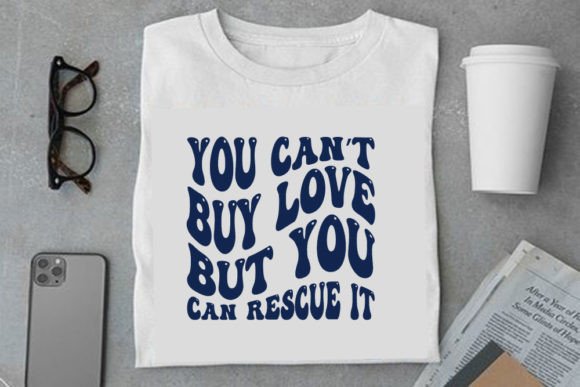
As a brand designer working with local businesses, my first impression of Retro Dog Design, You Can’t Buy Love but is one of genuine warmth and nostalgia. It evokes a playful, friendly, and slightly handmade personality, suggesting a brand that values heart over polish. This isn’t a cold, corporate graphic design asset. It’s an illustration that speaks to community, care, and a touch of whimsy. For small business owners in sectors like boutique pet supplies, artisan bakeries with dog-friendly treats, handmade soap or candle makers, or even a local florist with a community-centric vibe, this design can become a powerful visual anchor.
Translating a Graphic into a Complete Brand Story
The core sentiment of the design—“you can rescue it”—immediately frames the brand as compassionate and authentic. When considering this for a real project, say a local dog bakery or a handmade toy brand, this isn’t just a cute graphic; it’s a brand philosophy. The retro styling suggests reliability and timelessness, which can build customer trust. It feels more organic and playful than sleek and modern, making it ideal for businesses that want to emphasize their personal touch and connection to their community.
The Practical Magic of Multi-Format Files
Receiving the four file types—SVG, PNG, EPS, and DXF—is a significant practical advantage. For a packaging designer working on a new line of dog treat bags, the vector SVG and EPS files allow for infinite scaling and clean integration into a label layout without quality loss. The high-resolution PNG is perfect for digital marketing visuals, while the DXF opens doors for physical branding elements via cutting machines. This flexibility means the asset can serve from initial logo design concepts to final product manufacturing.
Where This Design Strengthens Real Business Presentation
In a tangible local business project, Retro Dog Design, You Can’t Buy Love but can be deployed across the entire customer journey to create a consistent brand identity. Here are key applications that elevate presentation:
- Product Labels & Packaging Accents: As a hero graphic on a jar of handmade dog shampoo or a decorative element on a bakery’s treat box, it provides instant shelf appeal and emotional connection.
- Brand Stationery & Touchpoints: Integrated into thank-you cards, business cards, or hang tags, it reinforces the brand’s personality at every personal interaction.
- Promotional & Digital Visuals: Used in social media graphics for a “Rescue Month” campaign, website banners, or flyers for a local pet event, it ensures marketing visuals are polished and cohesive.
- Seasonal & Limited Edition Packaging: Adapted with seasonal colors, it can transform standard product packaging into festive, special edition offerings for holidays.
This consistent use leads to stronger product recognition, a more professional overall package, and a clearer visual hierarchy where the brand’s core message is visually front and center.
Handling the Design with Strategic Care
While versatile, this illustrative style should be used with intention. It works best as a supporting brand element rather than a standalone, formal logo for a corporate entity. Be cautious in these scenarios:
- On very small labels where intricate details might become muddy.
- On packaging already crowded with mandatory text, like ingredient lists or legal information, where it could compete for attention.
- For luxury minimalist brands where decorative elements might clash with a clean aesthetic.
- On low-contrast backgrounds where the design’s impact could be lost.
The goal is to let the design complement and enhance, not overwhelm, the essential business information.
A Designer’s Checklist Before Client Deployment
Before committing this asset to a client’s small business branding project, I run through a practical evaluation. These notes are crucial for professional execution:
- Test on Real Mockups: Place the PNG or SVG onto digital mockups of the actual product packaging, menu, or business card to assess scale and layout.
- Check Versatility: Preview the design in black and white, on small label sizes, and alongside your chosen brand fonts—serif, sans-serif, or script—to ensure harmony.
- Confirm Commercial Licensing: Always verify the license covers commercial use for physical product sales, client work, and all promotional material.
- Assess Editability: Open the SVG file in a vector editor to confirm it can be easily modified for color adjustments to match brand palettes.
- Competitor Context: Compare the design’s application on your mockup against competitor packaging to ensure it stands out appropriately.
This process ensures the graphic design asset translates from a digital product into a robust, reliable tool for real-world brand identity.
The Final Impression: More Than a T-Shirt Graphic
Ultimately, Retro Dog Design, You Can’t Buy Love but offers local business owners and creative entrepreneurs far more than its initial category suggests. It’s a ready-made visual story of compassion and authenticity. For the handmade seller, it adds a polished decorative element. For the marketer, it provides a consistent anchor for campaign graphics. For the packaging designer, it delivers a scalable, quality illustration ready for labels and prints. When applied thoughtfully across branding, packaging, and promotion, it helps a local business not just look better, but feel more connected and trustworthy to its community—which, in the end, is the real rescue.