Positive Mind Positive Vibes: A Design Review for Embroidery
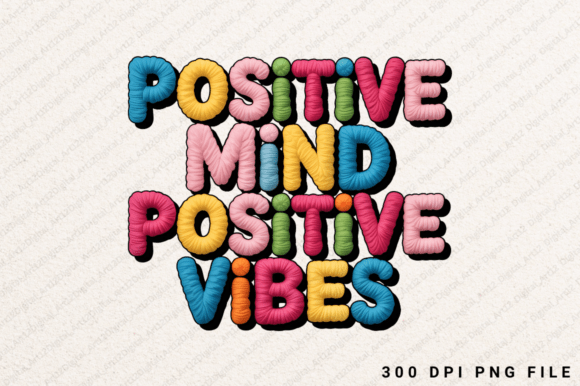
Let’s talk about this design. As a designer who reviews and stitches hundreds of files for clients and my own shop, I look at a design like "Positive Mind Positive Vibes Sublimation" with a very practical eye. I’m not just seeing a graphic; I’m imagining it stitched out on fabric, hanging in a hoop, or being received by a customer. What’s its real potential? Where does it shine, and where might it need a little extra care? That’s the review I want to share.
The Immediate Mood and Visual Personality
The first impression here is unmistakably upbeat and vintage-inspired. The phrase itself, "Positive Mind Positive Vibes," sets a clear, optimistic tone. Visually, the design promises a trendy, chenille patch look, which immediately suggests a certain texture and depth. This isn't a flat, minimalist graphic. It has a personality that feels warm, handmade, and intentionally nostalgic. For embroidery, that’s a great starting point. It tells me this embroidery file is meant to be a statement piece, not a tiny accent. It naturally belongs on projects where the message is the focal point—a custom sweatshirt, a tote bag for a friend, or a pillow cover in a cozy space.
Real-Life Embroidery Scenarios: Where It Works Best
I picture myself loading this file for a custom order. A client wants a personalized gift—perhaps an embroidered tote bag for a yoga teacher or a cozy blanket for someone starting a new chapter. The vintage-inspired, high-quality chenille patch aesthetic suggested by the description would translate beautifully into satin stitches and fill stitches on such items. The design would carry significant visual weight, adding perceived value to a handmade product.
For small business merchandise, like items for an Etsy shop or craft fair, this design offers strong branding potential. Stitched onto a simple apron or a tea towel, it creates a cohesive, positive brand message for a boutique. As a digital embroidery file, it’s a versatile asset for apparel decorators looking to offer trendy, message-driven options on t-shirts, caps, or baby clothes for a nursery. The theme is universally appealing, which boosts its giftability and buyer engagement.
A Specific Scenario: The Embroidered Sweatshirt Project
Imagine preparing a custom embroidered sweatshirt as a holiday gift. You’ve chosen a soft, mid-weight fabric. The "Positive Mind Positive Vibes" design, with its implied texture, would need careful planning. Stitch density is key here. A design aiming for a chenille patch look might use dense fill stitches, which can be stiff on stretchy sweatshirt fabric. A proper stabilizer is absolutely non-negotiable to prevent puckering and to maintain the clarity of the lettering and any decorative accents. Testing on scrap fabric first is my golden rule for any commercial embroidery project like this.
Caution Areas and Practical Designer Notes
While the design has broad appeal, its application requires thoughtful judgment. On small hoop sizes, the detail level might be compromised. Tiny lettering or intricate corners could lose clarity if reduced too much. I would be cautious on very textured or thin fabrics, where satin stitches might sink in or distort. Dark fabric backgrounds demand high contrast in thread color selection to keep the message bright and legible.
Embroidering on curved surfaces like caps presents another consideration. The layout needs to adapt to the curve without losing its visual balance. Furthermore, for products destined for frequent washing, like kitchen towels or baby clothes, a robust stitch construction is vital. I always advise checking the actual stitch density and small details in the file before committing to such items. Running a test in a black and white mockup, or comparing how it looks on both light and dark fabric in a digital preview, can save a lot of thread and frustration.
Impact on Customer Trust and Professional Finish
Using a design like this well affects more than just aesthetics; it impacts customer trust and your professionalism as a maker. A clean, well-executed embroidery of "Positive Mind Positive Vibes" on a finished product speaks to care and skill. It elevates a simple t-shirt design into a valuable custom apparel item. For craft businesses, consistency in applying such graphics across different products—tote bags, pillow covers, patches—strengthens brand recognition.
It’s also crucial to confirm the licensing terms before selling finished items or digital products. Understanding whether the embroidery file is cleared for commercial use is a fundamental step for any creative entrepreneur or digital product seller. This protects your business and respects the designer’s work.
Final Practical Takeaways for Your Project
Before you hoop your fabric, here’s a quick checklist born from real project use:
- Test First: Always stitch the design on scrap fabric of the same type and weight as your final project.
- Check Contrast: Review thread colors against your fabric, especially for dark backgrounds.
- Mind the Density: Assess the stitch density for the fabric texture; dense fills on stretchy fabric need extra stabilizer.
- Confirm Hoop Size: Ensure your planned hoop size accommodates the design's details without cramping.
- Inspect Small Details: Look closely at any decorative elements or lettering corners in the file preview.
- Background Matters: Consider how the design will perform on both light and dark bases; it might need color adjustments.
- License for Use: Verify the usage rights for personal gifts or commercial embroidery projects.
"Positive Mind Positive Vibes Sublimation" is a design with strong emotional appeal and visual character. Its success in your embroidery project hinges on matching its personality to the right product and applying it with practical embroidery wisdom. When done thoughtfully, it can create a handmade product that truly resonates—carrying positive vibes from your hoop straight to your customer’s hands.